Saturday, 26 December 2009

Christmas Cheers

Before we begin this post we'd like to give a special Christmas greeting to all our readers! Sorry it's a bit belated, but we've been a bit isolated for the last few days, as you'll see...

Days 163-164

Welding complete only a few hours later than expected, and the new tyres pumped up as BMW hadn't seemed to have bothered, we set out for Valparaiso, Santiago's hip little sister 120km away on the coast. The highlight of our explorations around the very hilly town was looking around Neruda (famous Chilean poet)'s house – full of eccentric artefacts and designed to give fantastic views over the city and sea.

On arriving in Valparaiso we saw an oil warning light on Emily's bike which, on consulting the manual, meant “low oil pressure, stop riding immediately”. As we couldn't see anything wrong with the oil level and the light went off on it's own, there wasn't much to be done but to continue the next day to Mendoza, Argentina – famed for its wine and also somewhere with a BMW dealership that might have new sprockets for Emily's bike. However we had only rounded one corner when Emily declared there was something else wrong. Thinking back to the day before we realised BMW probably had pumped up the tyres after all – Emily had a puncture in her brand new front tyre and it was flat again! We pumped it up and continued on for a good few hours before the oil warning light came on again. We thought we might be losing oil pressure through a leak somewhere and this was confirmed by some oil residue around the filler and on Emily's boot, so the first time the light came on Ric cleaned all the grime out from the filler cap, and the second time he tightened all the bolts on the crank case. Each time the light stopped for a while, but it kept coming back on when the engine got hot. It's pretty annoying to take your fully working bike in for a service and leave with a puncture and a serious looking warning light and it was very tempting to turn back to Santiago and give them an earful. But we really needed to get to Mendoza to try to get the sprockets and we didn't have time to do both before heading south for Christmas. So onwards we went and managed to arrive in Mendoza pretty late, but with only a few miles riding with a flashing warning light.

Days 165-167

We turned up at the BMW dealership first thing in the morning and begged the very busy service department to help us out. They were happy to, but the bike was in a queue behind the ones already in the workshop.

The bike delays in Mendoza had their silver lining, though: they afforded us some time to explore the wineries (the Mendoza area produces 80% of Argentina's wine), olive oil factories, and chocolate and liqueur making establishments in the area. Ric was driving so had to be a bit careful with the tastings, but Emily took full advantage of the fact that she was riding pillion and we had great fun choosing a few bottles and treats to enjoy over Christmas.

Back at BMW we found that the oil light was actually due to a broken cooling fan (hot runny oil holding less pressure), and this was fixed by 2pm on day 165. They hadn't had time to look at the tyre but we needed to head on and could sort that out later. They also didn't have the sprockets we needed, but advised us we could probably just make it to Buenas Aires if we kept the chain well lubed, so on we went.


Now we were against the clock. Ric's mum, Jill, was coming out to meet us for Christmas and we were due to meet her just 21 hours after we got the bike back, in Temuco airport in Chile some 750 miles away! We rode until it was just getting dark, at which point we found a small village with very little apart from a pretty nice hostel, and a tyre repair shop that was still open! Two patched punctures on the rim of the brand new front tyre (probably caused during fitting) later, it was nearly midnight and we set the alarm for 5.30am so we could start riding more dirt and tarmac at first light to get to Temuco – we were going to be late.

We did our best the following day, fuelling ourselves up regularly so as not to fall asleep on the bikes! We had warned Jill that we might be late and sure enough arrived at the airport around 3 hours after she had. We had a late lunch and then set off for the lodge we'd booked, in a National Park, a couple of hours away – Jill in a taxi (after discovering how expensive the hire cars were!) and us on our bikes. We'd already been on the road for eight hours and were pretty tired, so we weren't very impressed when it started to rain, the temperature dropped, and we realised we didn't really know where we were going. We eventually found the dirt road leading to the lodge but stopped 100m short: there was a very fast and full river that we needed to cross. The taxi wasn't going any further, and nor was Emily. Ric rode into the middle of the river and stalled the bike, meaning he had to put his feet in - we were already soaking from the rain so it didn't make a big difference. The owner of the lodge brought his truck out to save our luggage and Jill, and Ric returned to get Emily's bike across – again getting stuck so firmly in the rocks that this time Emily had to get into the river and push him out! We were very relieved to get to the lodge where our rooms were ready and a fire was burning.

Days 168-169

Thankfully the weather cheered up significantly after we arrived at the lodge, so we could enjoy some of the beautiful Chilean Lake District surrounding us. We had two days of sunny walks in the stunning park, seeing lakes, waterfalls, snow capped mountains and smoking volcanoes. The lodge prepared a special Christmas Eve feast, so we even had our own little party there. Of course we've missed our friends and family back home but it was great to see Ric's Mum and to experience a sunny Christmas on the other side of the world.

Day 170

We awoke to the sound of hammering rain, and soon gave up any aspirations for the 9:30 bus to Pucon. As we chilled out by the lodge's lovely warm fire the rain abated though, so when Patricio (the owner, architect and host of the lodge and also, fascinatingly, a documentary film maker) offered Jill a lift right into town we decided to make a run for it. The river was reasonably low and much easier for Ric to get the bikes across (just one foot dipped into the cold water), and the rain even held off until we were back on the tarmac so we got to enjoy the views from the road a bit more.

Pucon is very different to the park and the lodge, busy with tourists and full of all the amenities you could want – including internet access for the first time in nearly a week. So as well as shopping (last chance to load Jill up for her return journey) we have finally been able to catch up on all the Christmas messages.

Saturday, 19 December 2009

Just Deserts

Days 157-160

We hadn't quite seen enough desert yet, so on our second evening in San Pedro de Atacama we both hopped on Emily's bike and rode into the nearby Valley of the Moon, where sand and salt abound and erosion has made strange shapes in the landscape. Shortly before sunset we pulled up at a sand dune which people commonly climb and found a familiar motorbike there... Victor, the Argentinian Canadian who we met in Mexico, was apparently also at the dune! We had a catch-up with him and a Spanish guy on a small dirt bike who he was riding with, but we were unfortunately all heading in different directions the following day – we're sure we'll meet again though.

The few days of riding in northern Chile were nice but fairly dull: good roads, good fuel, lots of sand, lots of sunshine, and a bit of wind. There were a few things of interest to break the monotony of the Atacama Desert though. The first was an old railway station in Baquedano complete with decaying carriages and rusting steam engines along with the roundhouse for turning them round. The second stop was at the pretty cool “Hand of the Desert” sculpture. Further down the coast we camped at the lovely beach town of Caleta Pan de Azaca, where we hoped to ride out with the fishermen to see rare Humbolt penguins on the nearby islands but were sadly foiled by rough seas. From there we had just one more overnight stop on the way to Santiago, in the very liveable-in colonial town of La Serena. The last leg took us through increasingly fertile land and increasingly hot climes – we emerged from one tunnel close to Santiago a whole 10°C hotter than on the other side, and the weather stayed hot and sunny throughout our time in the capital.


Days 161-163

We've been in Santiago for over two days now and have managed to get the laptop sorted (broken RAM, again, same problem as in Panama and very easy to fix), and the bikes mostly sorted out. Unfortunately we couldn't get the sprockets to go with Emily's new chain, so we'll have to figure that one out later, and the servicing took so long that we had to leave her bike with it's broken pannier rack overnight in the welder's hopefully-capable hands. In the meantime we've done a pretty comprehensive walking tour of Santiago. It feels like somewhere in Europe - Spain or Italy maybe - except nicer. The difference with the major cities of the other South American countries we've been to is marked. The streets are wide and clean; there are trees, plazas and parks everywhere, all with manicured gardens; even the cars are all clean! Moreover, drivers obey the traffic lights, give pedestrians right of way, use their indicators and not their horns; all the cars have working brake lights, and not one vehicle has belched out black smoke at us as yet. Santiago's a big city but we have friends: Dan arrived on his Harley the day before yesterday (Jacquie having gone home for Christmas) and Thom and Flo arrived last night to give us a fun evening with “the gang” before we head off today.

Sunday, 13 December 2009

Shake, Rattle And Roll

Days 151-152

Finally back on both bikes, we enjoyed riding the hardtop South to Potosi, along the altiplano through desolate valleys and canyons. Potosi is a nice enough colonial town, famous for its cooperative mine where we had a brief tour of the harsh mining conditions the following morning. From Potosi the roads quickly deteriorated as we headed towards Uyuni - we started with 20 miles of new tarmac but then had another 100 miles of roadworks, gravel, sand and dirt to contend with. Little did we know then, but this road was great compared with what was to come. Our day was brightened up with a couple of chance encounters with some german bikers coming the other way, though - two guys on some old BMWs done up in a mock-wartime style and later on a couple on a fantastic Ural with sidecar.

Day 153

The Salar de Uyuni really deserves its own day in this account as it is so spectacular a thing! We met up with our French friends in Uyuni and the four of us rode up to the salt plane together and had a fantastic day taking the obligatory photo shoot on the salt and riding in any direction we felt like, at any speed (a fully-laden BMW will do over 110 mph on salt, in case you´re interested), practicing some red arrows style formation riding, without danger of hitting anyone or anything - really, it´s just salt for miles! We all spent the next morning picking the white stuff off our bikes and hoping the corrosion would be delayed by the amount of dirt already on there, at least until we get to Santiago and have the bikes cleaned properly!

Days 154-156

From Uyuni we all wanted to travel South, via some lakes, geysers and desert scenery into Chile and we`d both gathered vaguely collabatory information on which roads were better than others to get there. The Frenchies wanted to go with the "easy" route and although Ric was quite keen on the difficult but more scenic route we decided company was best. We had been told that the road to Laguna Colorada would take around 5 hours, and the Frenchies were told it was a day´s ride so we all felt reasonably confident heading out from Uyuni that we should make it ok. However it soon became apparent that this was highly optimistic for big, laden motorbikes such as ours, especially as we, in keeping with recent times, encountered problems with the bikes...

In the end it took us two days to reach Laguna Colorada and it was a difficult two days to say the least. Emily´s pannier rack broke: the first time we just tied the broken joint up with string; the second time we needed to take the panniers off the rack, tying one to the top of Emily´s bike and the other to the top of Ric´s bike; and the third time we had to take the pannier off Emily´s bike altogether and strap both to the top of Ric´s bike, leaving Emily with just the tail bag. When we stopped for lunch on the first day we also noticed that Ric´s tyre was low on air. We couldn´t find any puncture and it was losing air slowly so we just resolved to pump it up... except that our pump was having difficulties. At just this moment we were very lucky to find a passing 4WD running a tour of the area (the traffic here is almost exclusively 4WDs running tours and an occasional lorry). We were able to borrow their compressor to pump up the tyre and they agreed to cook us some rice and egg as they were preparing lunch for their tour group and there was absolutely nowhere open to buy food in the town! The following morning we were lucky to be able to borrow the hostel´s track pump to get the bike ready for another day´s riding. It wasn´t just our bikes causing problems though. The road (the "easy" road) was either washboard (corrugated dirt which is very uncomfortable and slow to ride on) or sand. In many places the sand was so deep that we were wading the bikes through, buried half a wheel deep. Thom and Flo had it the hardest as their bike is the heaviest to begin with, plus there are two of them on it, and they dropped their bike 5 or more times. Ric had the worst tyres for the sand, having road tyres front and back, and was also carrying a lot of extra luggage - he dropped his bike twice. Emily took full advantage of her lighter bike, superiour tyres, and position at the back of the group giving her the most warning of the terrain and managed to keep her bike pretty much upright the whole time. It wasn´t easy for anyone though, and we can´t begin to imagine what the "difficult" road would have been like!

When we finally reached Lago Colorado it was a beautiful sight, but we were reluctant to go around to the refuge on the other side, knowing we would have to backtrack on the same sand road the following day, so decided to try to camp up near some geysers that we wanted to see on our way out toward Chile. First though, we had to go to Bolivian customs to check the bikes out of the country, which is strangely located 60 miles from the border, and pretty close to the geysers. The customs office is heated by thermal water running in pipes around the building, which comprised the office and living quarters of the single customs officer, and at over 5000m with howling winds we were pleased for the respite. So pleased in fact that asked if we could stay, realising that camping might be chilly (we´d been warned on the way that temperatures were down at -5C in the night). After some deliberation and clearing out of a small room, we were told that we could stay the night, use the kitchen to make our food, and generally make ourselves at home!

The next morning we woke up early to visit the geysers in the dawn light (apparently the best time). We knew this would be difficult for us as we´d need to use the pump which was really on it´s last legs, and indeed it proved impossible when the time came. So we sent the Frenchies on their way and came up with a new plan to ride very carefully without the panniers to try to find someone with a pump... which immediately failed because Ric´s bike wouldn´t even fire up. We tried a push start but there was only a certain distance that Emily could push the bike at 5.30am, in -5C temperature, over 5000m of altitude, and in many layers of clothing, and this wasn´t enough. So we went to the geysers on Emily´s bike leaving everything else at the customs office. We found the Frenchies before we found the geysers - they were still looking for them too. When we eventually found the bubbling mud pots and steaming geysers (no 100-foot water shoots as promised) they were a bit of a disappointment after all the hassle! While the Frenchies pushed on to Chile, we returned to customs, and put Ric´s bike in the sun while we had a hot drink... after 20 minutes of warming up the bike started! Ric found a lorry with a compressor at the chemical plant next to the customs office (the only two buildings for miles around) and we were finally on our way. A few hours of sand and gravel (and admittedly some very stunning scenery when you stop and can look beyond the 10m of road in front of you) later we were elated to reach the Chilean border.

The change in road conditions was immediate: the dirt suddenly became perfectly smooth and sand-free and gave way in just a few miles to a beautiful stretch of smooth dark tarmac, all of which was perfectly signposted and delivered us in no time to the very civilised (and comparatively very expensive) town of San Pedro de Atacama. We washed everything we owned, including all our soft bags whose zips had all ceased up in the dust, and finally settled down with the laptop to discover... it was broken! Possibly by all the bumping around, but we´re down to using internet cafes for the moment until we can find someone to take a look for us.

Monday, 7 December 2009

Highs And Lows

Days 141-142

With Emily's bike fixed Lake Titicaca beckoned. We visited the “floating islands” from Puno – just 5km from shore people still live on islands made from reeds (and move around on boats made of reeds, and live in houses made of reeds, and make souvenirs for tourists out of reeds). They are anchored down most of the time to stop them drifting off into the middle of the lake, but if a neighbourly dispute occurs between islands they can up anchor and move on!

Moving round the (not-actually-the-world's-highest-navigable) lake we crossed the border into Bolivia and on to the small town of Copacabana from where we visited one of the more conventional stationary islands, the “Island Of The Sun”. We didn't really have long enough to get into island life due to the bike delays back in Puno and had to settle for a rapid and shepherded tour, but it was still a beautiful place where you could imagine the sun being born (as per pre-Incan legend). Bolivia is the cheapest country we've visited so far, and to celebrate this fact we visited the most expensive restaurant in town for it's famed chocolate fondue - yum!

Days 143-144

Our final venture onto the lake was our most precarious ferry crossing so far, on a rickety wooden raft with designated bailers, but both bikes made it to shore intact, and on to La Paz just in time to sign up for a trip to see the local wrestling that evening. It's WWF style but lower budget, and includes women wrestlers in traditional dress (and also midgets apparently, though we weren't lucky enough to see them!). A very entertaining evening, for all the gringos in the front row as well as all the local families, many of whom were clearly avid followers.

There were some excursions we wanted to do out of La Paz: climbing Huayna Potosi, and visiting the Amazonia wilderness from nearby Rurrenbaque, so we made some bookings. Since everybody keeps telling us stories about how bad the roads in Bolivia are, we also decided to ride 40 minutes out of town to visit “Motorcycle Tours Bolivia”, a company advertised in our hostel. This turned out to be an excellent decision. Firstly the ride took us through the other-worldly “Valley of the Moon”, but more significantly the main guy there was incredibly helpful and friendly. He told us about all the different routes for the rest of our journey in Bolivia, things to see, road conditions, how far we could get in a day, where the petrol stations were, etc. We relayed our sorry story about the tyre and he was also able to help with this – he took us to the poshest motorbike shop in La Paz (a Honda dealer) and they somehow found, tucked away out back and much to even their surprise, a single tyre which just happened to fit the back end of a BMW! Bolivia is probably now completely out of large motorcycle rear tyres.


Days 145-147

In the Galapagos we met an English guy, Chris, who told us of his hike up Huayana Potosi, a towering peak in the Andes standing at 6088m, and showed us his photos and videos. Immediately we were enamoured with the idea, and since then Emily has had us marching up every nearby hill to try to gain some level of fitness suitable for climbing the mountain. We were driven from La Paz up to base camp at 4700m and had a practice crampon / ice axe session on a nearby glacier which went smoothly enough. The next day we hiked for a couple of hours up to high camp at 5130m and had the rest of the day to acclimatise, with the plan to sleep early, then set off to climb the mountain proper at around 1am and arrive at the summit for dawn. Emily has a history of altitude sickness, but we had been pretty high for a pretty long time at this stage and we were hopeful that she would manage. We weren't holding our breaths though – about one third of people fail to climb this mountain, usually due to altitude sickness on the final hike up from high camp.

As the day at high camp wore on, Emily started to feel bad. And then worse. She was unable to eat dinner and had to use the bathroom a little too often for comfort. At about 11pm she woke up, and just managed to make it outside before being sick. At midnight when we all got up to get ready for the trek Emily only managed to go to the toilet three times then go back to bed. So as Ric, the Canadian guy who had joined us at high camp, and their two guides hiked up the mountain, Emily alternated between sleeping and dashing to the outside toilet located 20m down a slope from the refuge (running there, and crawling back).

Ric meanwhile was walking, jumping crevasses and climbing ice under a moonlit sky in record time. It normally takes about 4 to 6 hours to summit from high camp, and despite the fact that they had to take some long breaks near the top so that they had a bit more light for “el cumbre” (the summit), Ric was up and back down in just five and a half hours! Part of the reason for the speedy return was that he wanted to see how poor Emily was doing, but unfortunately by the time he made it back to high camp he was so knackered all he could do was sleep rather than nurse his fiancĂ©e!

Climbing back down to base camp a couple of hours later was probably a bigger struggle for Emily than it had been for Ric to reach the summit, but we made it eventually and it was a huge relief to get back to our hostel in La Paz, with a private bathroom just steps away from the bed, and to meet our French friends there, one of whom (Thom) is a doctor!


Days 148-150

Emily spent the next few days mostly in a state of pain, exhaustion and despair while Ric kept himself busy running around looking after Emily and, regrettably, cancelling our trip to the Amazon: we didn't have time for Emily to get better AND to go the jungle, and trying to do both at once seemed foolish. Dr Thom kindly examined Emily and kept an eye on her, advising that it was most likely a viral thing (albeit a nasty one) that we just needed to sit out. But when Emily felt no better two days later we decided to go for the drugs – one day of antibiotics, or maybe just one extra day of resting, and Emily felt a whole world better!


Her recovery was just in time for us to ride The Death Road (Emily riding pillion in case it was a bit too much excitement so soon). The road isn't as dangerous now that they've built a wider, asphalt, less precipitous option that the majority of traffic has diverted to, but it's still an incredible thing. It hugs to the edge of the mountain with sheer drops, amazing views, a narrow, loose dirt surface, and many blind corners. And people do still die: in the motorbike shop back in La Paz we met English ex-pat Robin who used to run mountain bike tours down it (one of the most popular tourist pursuits out of the Bolivian capital) and he told us that just last week one of the mountain bike tour operators with the best safety record lost another two tourists over the edge. Going up (by motorbike) is purportedly much safer than going down (by mountain bike), though, and you'll hopefully be glad to hear that we made it back to La Paz in one piece.

We picked a good day to ride the Death Road as it happened to also be Election Day in Bolivia. This meant that very few vehicles were allowed on the roads anywhere (we blagged it with the “but we're just tourists and don't really understand” line), giving us beautiful traffic-free conditions the whole way. The only tricky bits were all the impromptu street parties we had to drive though, with food stalls, families out for walks, kids playing on the street, etc, but it was great to soak up the holiday atmosphere on the way through. Fingers crossed that the “right” person gets elected president and a load of road blocks and protests don't flood the country in the next few days...

Friday, 27 November 2009

It's All Part Of The Adventure

Days 134-137

After our night ride out of the protest area, we arrived in Cuzco at 7am and started our usual search for a hostel with all the necessary prerequisites, in particular parking for the bikes. Emily watched the bikes while Ric wandered around trying to find somewhere, but it took a bit longer than normal and Ric's battery went flat in the process (yes, he left the ignition on). So our first tour of Cuzco involved Emily pushing Ric's bike so he could try to jump start it, down whichever street was most downhill irrespective of one-way conventions. After many failed attempts, Ric rolled round the corner to try to park up, found the best hill yet and with one almighty jump managed to get the bike started. Little did we know at the time that this was just the start of many problems!

The next few days went smoothly, however. We visited the awesome Macchu Picchu, leaving our bikes in a nearby town and taking a train and a steep hike to reach the site (no roads all the way there, unfortunately). The primary icon of Peru was definitely worth the hype (though Emily had been there before), and getting there early to avoid the peak crowds was worth it too. On the way back to Cuzco through “The Sacred Valley” we looked round a number of other Incan sites which were all very cool, but somewhat overshadowed by the superlatives of Macchu Picchu. Cuzco itself is a nice city with lots to see and do (including the famous Norton Rats bikers' bar that was sadly devoid of bikers when we stopped by) but, as we'd been warned by the American family we met in Abancay, very “hassley”.


Days 138-139

From Cuzco we wanted to visit the Colca Canyon. The only all-tarmac route would mean a long way round and doubling back again later so we chose to take the more direct route to Chivay, at the edge of the canyon. We had read that there was a “mostly paved” route somewhere in the region and took a guess from the map at which this was, having tried (not as much as we should) and failed to get local advice on the matter. The route was fairly high altitude – mostly between 4,000 and 4,700m – and although the scenery was beautiful, the thundery hail storms (two of them) were not as pretty and very cold. By mid-afternoon we were getting close, about 60 miles away, but the road really started to deteriorate. We asked some locals how long they thought it would take: “about five hours”. Five hours! With only two and a half hours of sunlight remaining this wasn't the best answer. We rode for about half an hour and bumped into some other locals on dirt bikes. So of course we went for a second opinion: “about five hours”. Eek! Our half an hour's riding had done nothing to reduce the estimate! We decided to carry on as fast as possible and stop at any town that might have a bed, or else find somewhere safe to pitch the tent. Now the road was just a track full of big stones. Emily in particular felt her bike twisting beneath her, and mentioned to Ric on the radio that her bike was bottoming out more than normal. Stopping safely on the big stones was just as tricky as riding across them, but when we came to a clearing Emily rode in front so Ric could check the tyre: flat as a pancake. We set about fixing the tyre, with our little kit and our bike pump but couldn't get a solid fix. The sun was setting and the air getting colder, but as we were stopped we noticed buses and lorries travelling at a reasonably speed on a road crossing our track about 300m away, and more than that we could see a small town! So being extremely careful on the semi-inflated tyre we made our way there, and managed to find very basic lodgings (we're talking outside toilet, no shower). When dinner, bed and breakfast all come in at just four pounds each you can't really complain, though.

The next morning we put more and more plugs into the tyre, pumping it up with the hand pump each time, then finding it still leaked. Eventually we thought we had it so we rode out towards Chivay. Just as we started out onto the reasonably good unpaved road, Ric did an emergency stop. Emily put on her brakes but not much happened – not the best time to discover your assisted breaking is no longer working. She managed to slow down a lot and swerve to the side, and almost got away with it, except for a small clash of the paniers which sent her and her bike sprawling across the road. Ric's reason for stopping was that the GPS had jumped off the bike and he pointed out that, as we had found it between his two tyres, if he had gone any further he would have squished it. Emily felt a bit miffed that the GPS seemed to be more important than her, but she was fine; the breaks are a pain but still work if you just press them harder so we continued on.

The day improved after we reached Chivay and rode into the beautiful Colca Canyon where we were lucky enough to see some of the resident condors flying up on thermals. However, we realised we were still leaking air, so when we got back to Chivay put another plug in the tyre and used the petrol station air to pump it up. Surely we must have it this time, and after a night at rest the pressure was still good.


Days 140-141

From Chivay we wanted to get to Puno on Lake Titicaca and it wasn't too far to go so we were happy to stop at various view points on the way. It was at one such point that we discovered Emily's broken pannier rack. This probably happened when she dropped the bike the day before, or possibly it was weakened and then rattled itself off on all the subsequent bad roads. There wasn't much we could do but tie it up with string so it didn't cause any further damage to the pannier, which it was busy wearing a hole in. As we were about to leave, a German couple pulled up on two BMWs (a 1200 Adventure and 800 GS – both slightly bigger versions of our two bikes, and much more heavily laden). We had a good old chat about biking and the roads to come (apparently some of the Bolivian roads we're planning on taking are really bad); they had also met our French friends a few days before so we already had friends in common! We are going separate ways at the moment but hope to meet up in Chile or Argentina.

So we continued on to Puno, and it wasn't until we were quite close, having stopped at some more ruins on the way, that we discovered Emily had a flat again. We limped into Puno and into a hostel. Just before setting out to find a tyre repair shop and a welder for the pannier rack Emily opened the tail bag, and the zip broke! Sometimes everything just goes wrong. We had the tyre fixed and agreed to do the welding first thing in the morning. First thing in the morning Ric found that the tyre was flat again! So he made another trip to get the tyre fixed again – a stone had worked it's way in probably because of running it so flat – and a bit of time at the welder next door, while Emily fixed the bag for the millionth time this trip, and fingers crossed that now we're sorted. At least all this tyre fixing and welding was very cheap – just over one pound a pop!

Friday, 20 November 2009

From Desert To Darkness!

Day 127-128

In the northern reaches of Peru we interspersed our rather tedious desert rising with a bit of historical culture. The treasures from the tombs around Cliclayo were impressive and the old ruins of Chan Chan and the even older temples of the sun and moon near Trujillo were all worthy distractions.

Days 129-130

From the coast we decided to take a rough dirt road through the Canon del Pato to Huaraz, rather than opt for the wimps' tarmac route. It was a tough ride, but the canyon was stunning and it was definitely worth it – a wonderful variety of hues as we snaked our way up through rough-hewn tunnels carved out of the rock. While we managed the journey without dropping the bikes, the route did claim two victims: the windscreen-dangling turtle that Emily bought Ric for his birthday in the Galapagos took a leap for freedom somewhere; and the bumpy rocky road put cracks in one of Emily's Touratech (Touratrash?) panniers, and more cracks in the one of Ric's that we had fixed at Jorge's in Merida.


Huaraz is apparently backed by an enormous mountain range of crisp white peaks – one of the most beautiful in the world – which remained hidden for our entire stay there. We hung around nonetheless as there happened to be a metal worker round the corner from the hostel and we thought it best to take the time to reinforce all the panniers before taking them any further. They now all weigh about twice what they used to but are seriously strong! The delay also gave us a chance to do some serious re-planning, the conclusion of which was that we need to make haste to fit in everything we want to before the end of the trip.

Days 131-132

Our very friendly hostel owner in Huaraz gave us the address of his parent's place in Lima, suggesting we drop by and stay with them. As we just wanted to pass through the capital and not have to negotiate our way through the more touristy centre this worked out very nicely for us, and the delightful old couple were great hosts.

The desert didn't stop at Lima, and we rode through more and more of it all the way to the Oasis at Huacachina. It's a bit of a touristy spot (more gringos than we'd seen in a long time) but we'd heard good things about buggy and sandboarding trips into the neighbouring sand dunes. Indeed, the trip didn't disappoint and was brilliant on all fronts: being driven round the sand dunes by a near maniac was scream-inducing fun much like being on a rollercoaster; the sandboarding was tricky but worth it (although in the end Ric gave up on the slow and difficult standing-up approach to join in with Emily's faster and easier lying-face-down method); and the scenery of never-ending dunes was spectacular, especially when after a fun few hours the trip ended with watching the sun setting over the rolling sand – awww.


Days 133-134

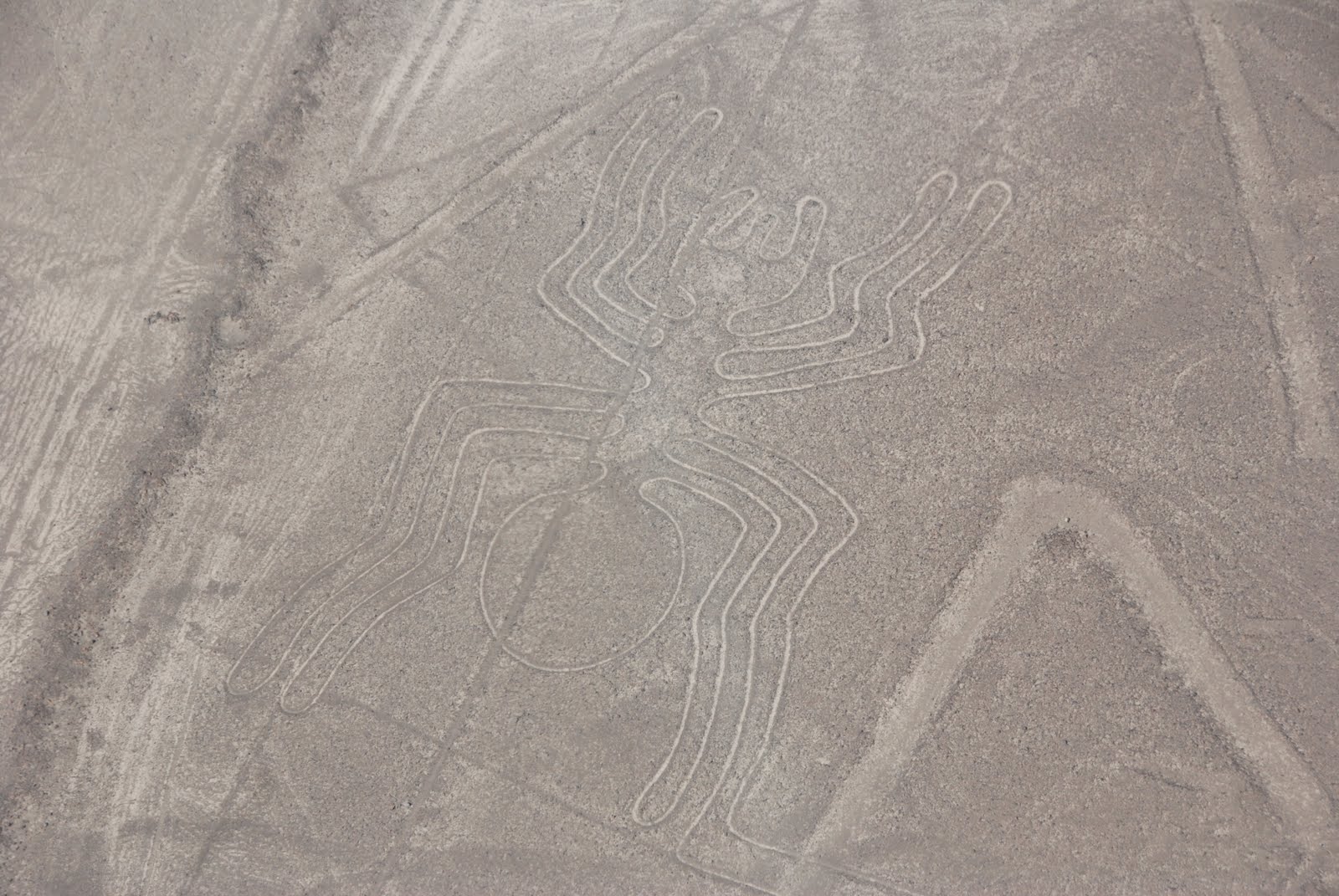
The following morning we got up very bright and early and headed straight for Nazca aerodrome to get an early flight over the famous Nazca Lines for Ric (not Emily as she did the flight when she was in Peru eight years ago and so decided to save her dollars for something else – a handbag in Cuzco as it turns out...). The flight was great – perfect weather for it and Ric got to sit in the co-pilot seat so had the best view – and he managed to get onto a flight within 5 minutes of arriving which meant, we thought, that we had plenty of time to get to the next stop before dark.

The next stop was the biggest town on the way up to Cuzco, Abancay (Cuzco being too far to realistically make it in one go). As soon as we started out, leaving the dunes and climbing into the mountains we realised we were going to need a long time for the journey: road works all over the road were causing regular 15-minute waits along the road. At one of these we got chatting with the car at the front of the queue (having obviously driven straight to the front ourselves – bikers' privilege!) who told us that the road to Abancay had been closed for the last eight days! They were also hoping to get there though so we got the sense that it might not be entirely closed, but had no idea what the problem actually was. If our Spanish had been better, maybe we would have gotten the full story...

After climbing through roadworks for a good few hours we stopped for lunch. Then, the roadworks stopped and the rain came. We were on a plateau of over 4,500m and it was bitterly cold as well as wet so we made pretty slow progress. We'd asked about the road closure at a petrol station and had been told that the problem was around the next major town on the way to Abancay but that we should hopefully be able to get by on the bikes. There was no other way to go except back, so onward we went. As we dropped off the plateau and the temperature rose a little we started coming across a lot of rocks in the road – piles here and there which looked to be mini landslides.

We got pretty close to the town where we'd heard the main problem was and there were a few lorries waiting there. We went to the front, but with no officials and nobody volunteering any kind of explanation as to why people were waiting we just carried on down the road. This is when the piles of rocks started to get really bad. We figured there must have been an earthquake or something and that was the cause of the closure, though we couldn't fathom why they hadn't been able to clear more than one lane through the rubble in eight days. We then started to see lots of lorries and trucks coming the other way so figured we must be able to carefully pick our way through. We eventually caught up with the lorries going our way and were in the middle of their convey when we started to enter the town. As we got closer we became more perplexed. Here there were other things in the road: bits of lorry, cut down trees, burnt piles of rubble... and then we saw a mass of people at the town entrance, baying for blood, spray painting graffiti on lorries and buses as they slowly crawled through. We were pretty relieved when they cheered us and our bikes on but still didn't want to hang around in the death-mob-town for long so reckoned we'd better brave the impending darkness and carry on to Abancay, well beyond what was supposedly the epicentre of the problems, rather than lodge here as we'd been hoping to after losing so much time.

So we carried on straight out of town, noticing quickly that the piles of rocks in the road were not always near where land could have slid – these were man-made landslides / rock piles presumably put there by the townspeople who were protesting. The piles seemed to subside and the rain took over. Would this nightmare ride ever end?! Not for a while: the piles of stones got worse! We were going slowly because of the rain and as it started to get dark we could see even less of the road and the rocks in our way. As we entered Abancay there were lit pyres in the road with people sitting around them. We were “allowed” into the town itself by the people stopping the rest of the traffic, so we made our way towards the centre, through the throngs of people and under the wires strung across the road, and straight up to the safest place we could find – a police station with some motorcycle police outside! The cop we spoke to was a very friendly guy who explained what was going on (el paro – the strike) and asked us where we were going tonight. “Here?” we replied. We were then hit with the news that even more protesters were arriving that night and all the roads would be blocked again in the morning! The policeman suggested we leave immediately to get out while we could, but there was no way we were embarking on a five hour journey to Cuzco wet and cold at 7pm in the dark, so we decided we would have to leave first thing in the morning to avoid the new road blocks. The policeman suggested 4am and we suggested 5am (dawn, as a policy we don't ride in the dark) and he thought this would be OK. He then led us to a hotel, through more throngs of people – it was a huge relief to park up in the safe car park and get inside!!


It was also quite a relief for an American family who had been holed up for a few days having had quite a bad experience on their way in two days previously. They had joined with around six lorry drivers to clear a huge landslide so they could get through – apparently the lorry drivers had definitely done it before though and made reasonably short work (a few hours) of it. They'd also driven past a group of children brandishing machetes, and had rocks thrown at their Land Rover... The policeman suggested we all left together for Cuzco first thing in the morning, so we agreed to leave at 5am. Then decided to be on the safe side and say 4am. At 2.30am Dirk knocked on our door to say that someone had just arrived from Cuzco, said the road was clear and we should leave now! So at 3am we pulled out of the hotel...

Two minutes down the road we were stopped by a group of drunk men who didn't want to let us past, but after Dirk and Danielle's careful negotiation Dirk just had to accept a shot of their grog and we were allowed through. From there it was slow but sure progress around the various obstructions to the border of the region a couple of hours later, just as the new day was on us. The strikes were just within that one region – due, we gathered, to their regional leader being ousted for some reason – so once we cleared Apurimac boundaries we knew we were free and clear! At that point we bade farewell to the Land Rover (nice vehicle, but not a fast mover) and sped on to Cuzco.

Friday, 13 November 2009

From Darkness To Desert

Days 122 – 125

These days have been characterised by landscapes. First we rode the Quilatoa loop – a mostly dirt and sand ring road through indigenous villages and beautiful Andean countryside, culminating in the Quilatoa crater lake. Unfortunately the views were masked by mist and smoke which hung in the valleys under a layer of cloud the whole day, but we were still able to get a sense of it all.

We then went to Banos and rode out east – just tens of kilometres took us from highland down into jungle, and there were a number of beautiful waterfalls to visit on the way. Climbing up through caves to behind one of the falls was the highlight (and wet-light) of the journey, and the hot (and very cold) baths of Banos were a nice treat before we left the region.

From Banos we rode up to the base camp of Volcan Chimborazo at 4860m. The snowy top was shrouded in cloud but we had fantastic views across the sandy high plain and beyond. From here the spectacular views just kept going as we headed south, until we'd climbed right down to almost sea-level for the border crossing to Peru! On our way we stopped at Cuenca, which is Montecristi (Panama to you) hat central. We couldn't pass up the opportunity to meet octogenarian Alberta Pulla who has been refurbishing hats since he was six years old, and who found the perfect hat for Emily.

We were slightly relieved to leave Ecuador without incident in the end. Ecuador uses a lot of hydroelectricity, which is great, except that they haven't had enough rain this year and as a result there's an electricity shortage. Blackouts have been imposed to save electricity – we experienced full blackouts in some towns, but in Cuenca they rotated the electricity by quarter throughout the day and night. Not having street lighting is bad enough, but the lack of traffic lights is absolute carnage! We saw many a near accident but thankfully weren't involved in any...

Day 126

Within a few hours of crossing the border into Peru we met some locals at a petrol station who invited us to have lunch with them at their favourite restaurant nearby, so we hope this is a good sign of things to come! Peru was immediately different to Ecuador, though. As well as being visibly poorer with more shacks rather than buildings and a lot more rubbish around, it's also a lot dryer so far, including our first desert of South America – surprisingly cool but so windy Ric got a crick in his neck from his fancy helmet being blown around so much!